
A Complete Guide to Brain-Based Care for Learning, Focus, and Recovery
Published by: North Lakes Chiropractic & Neurology | Category: Functional Neurology, Brain & Body Health | Reading Time: ~8 min
“The brain has an extraordinary ability to change, adapt, and heal — when it is given the right inputs. Functional neurology is the science of providing exactly those inputs.”
— North Lakes Chiropractic & Neurology
| Multi-Modal Therapy Approach | Children & Adults Patients We Help | Brain & Body Integrated Care |
What Is Functional Neurology?
Functional neurology is a specialized field that focuses on how the nervous system functions — not just whether it has a structural disease or injury. While conventional neurology primarily diagnoses and treats conditions involving measurable structural damage (tumors, lesions, nerve death), functional neurology addresses the far more common scenario: a nervous system that is working, but not working optimally.
The foundational principle of functional neurology is neuroplasticity — the brain’s proven ability to reorganize itself, form new connections, and change its function in response to specific stimulation. This means that many conditions once considered permanent or untreatable can be meaningfully improved through targeted, evidence-based neurological rehabilitation.
At North Lakes Chiropractic & Neurology, functional neurology is applied through a multi-modal approach that combines chiropractic care with specialized neurological therapies — addressing the brain and body as the integrated system they truly are.
How Is Functional Neurology Different from Conventional Neurology?
The distinction between functional and conventional neurology is important — and understanding it helps explain why so many patients find answers here after years of being told their tests were ‘normal.’
- Conventional neurology: Conventional neurology focuses on diagnosing structural or degenerative disease — conditions visible on MRI, CT scan, or nerve conduction studies. If tests are normal, the condition is often attributed to stress, anxiety, or left without explanation.
- Functional neurology: Functional neurology examines how different regions of the nervous system are firing, communicating, and integrating with one another. It identifies areas of underactivation or dysregulation that do not show up on standard imaging — but that drive real, measurable symptoms.
This distinction is especially significant for patients with learning difficulties, attention challenges, behavioral issues, chronic dizziness, post-concussion symptoms, and coordination problems — conditions for which conventional medicine frequently has limited answers.
Key Principle: A brain region that is underactivated does not show up on a standard MRI as damaged — but it will show up in how a person learns, moves, focuses, and feels. Functional neurology finds and rehabilitates those underactivating regions.
Conditions Functional Neurology Addresses
Functional neurology has demonstrated meaningful clinical benefit across a wide range of conditions affecting both children and adults. At North Lakes, our multi-modal approach is applied to help patients with:
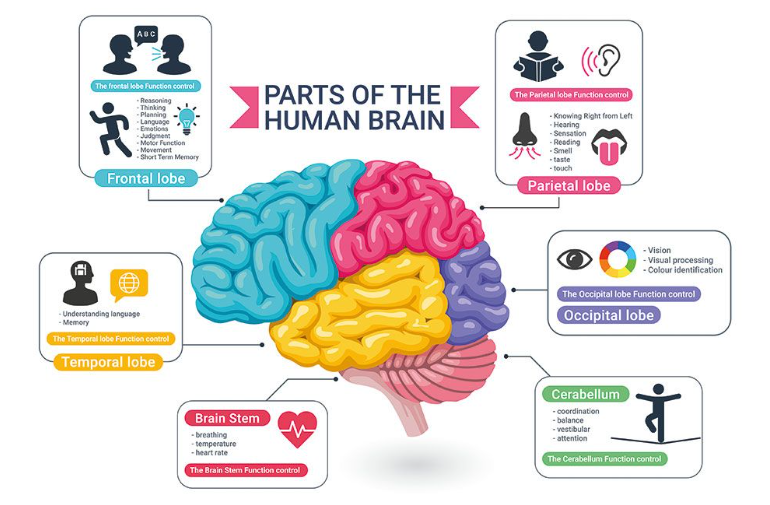
- Learning difficulties: Dyslexia, auditory processing disorders, visual processing difficulties, and general learning delays that do not respond to conventional educational interventions often have underlying neurological bases — including cerebellar underactivation and delayed sensory integration — that functional neurology directly addresses.
- Behavioral challenges and ADHD: ADHD, oppositional behaviors, emotional outbursts, and impulse control challenges frequently reflect dysregulation in frontal lobe function and sensory processing circuits. Functional neurology identifies which pathways are dysregulated and provides targeted therapies to improve self-regulation.
- Focus and attention problems: Difficulty sustaining attention, mental fatigue, distractibility, and poor working memory are commonly linked to underactivation of specific prefrontal circuits. Functional neurological rehabilitation strengthens these circuits through progressive, targeted stimulation.
- Motor coordination and balance: Clumsiness, balance problems, coordination difficulties, and motor sequencing challenges are frequently rooted in cerebellar dysfunction. The cerebellum is highly responsive to functional neurological therapies and can show significant improvement with targeted exercise and stimulation protocols.
- Emotional regulation and sensory processing: Anxiety, mood instability, sensory sensitivity, and difficulty managing emotional responses often reflect dysregulation between limbic system structures and the prefrontal cortex. Functional neurology works to strengthen the regulatory pathways that calm emotional reactivity.
- Concussion and injury recovery: Post-concussion syndrome, traumatic brain injury recovery, and sports-related concussion care represent one of the most important applications of functional neurology. Persistent symptoms — brain fog, dizziness, light sensitivity, headaches, and cognitive difficulties — reflect ongoing neurological dysfunction that functional neurology is specifically designed to assess and rehabilitate.
Important: Functional neurology is not limited to children with developmental challenges or athletes recovering from injury. It is equally effective for adults experiencing cognitive changes, chronic dizziness, balance disorders, and neurological symptoms that have not responded to conventional care.
The Science Behind Functional Neurology: Neuroplasticity and Brain Activation
The scientific foundation of functional neurology is neuroplasticity — the discovery that the brain is not fixed and unchangeable after early development, but remains capable of significant structural and functional reorganization throughout life in response to appropriate inputs.
For decades, the prevailing view was that the brain you were born with was largely the brain you kept — that damage was permanent and developmental trajectories were fixed. Modern neuroscience has overturned this view entirely. We now know that:
- Neurons that fire together, wire together — repeated activation of specific neural pathways strengthens their connections and efficiency
- Underactivated brain regions can be rehabilitated through specific, progressive sensory and motor stimulation
- The cerebellum and brainstem — key targets in functional neurological care — show particularly high levels of plasticity and responsiveness to treatment
- Changes in brain connectivity and activation patterns can occur relatively rapidly with the right therapeutic inputs, often within weeks of beginning treatment
Functional neurology harnesses these principles by identifying which specific brain regions and pathways are underactivated or dysregulated, then delivering precise therapeutic stimulation to those regions — through eye movement exercises, balance training, sensory stimulation, cognitive challenges, spinal manipulation, and other modalities — to drive neuroplastic change.
What Does Functional Neurology Treatment Look Like?
At North Lakes Chiropractic & Neurology, functional neurology care is personalized to each patient based on a detailed neurological evaluation. There is no single protocol — every treatment plan is built around the specific patterns of neurological dysfunction identified in that individual.
Common therapeutic components of functional neurology treatment include:
- Eye movement therapy: Controlled eye movements are among the most powerful tools in functional neurology. Because eye movement pathways involve the brainstem, cerebellum, and multiple cortical regions, targeted eye movement exercises can simultaneously activate and rehabilitate a wide range of neurological circuits. These exercises are used for attention, reading, balance, concussion recovery, and more.
- Vestibular and balance rehabilitation: Balance and gait exercises, vestibular rehabilitation, and proprioceptive training activate the cerebellum and brainstem — brain regions that are implicated in learning, attention, emotional regulation, and motor control — as well as improving physical coordination.
- Chiropractic neurological input: Chiropractic adjustments provide powerful neurological input through joint mechanoreceptors that directly stimulate cerebellar and cortical circuits. At North Lakes, chiropractic is used not just for musculoskeletal symptoms but as a neurological rehabilitation tool — changing brain function through spinal input.
- Hemispheric integration exercises: Specific movement patterns, coordination exercises, and cross-body activities are designed to activate underperforming hemispheres and strengthen inter-hemispheric communication — improving learning, behavior, and coordination.
- Sensory stimulation protocols: Controlled light, sound, and tactile stimulation are used to activate specific sensory processing pathways in the brainstem and cortex — particularly valuable for patients with sensory sensitivities, auditory or visual processing difficulties, and post-concussion light or sound sensitivity.
- Cognitive rehabilitation: Targeted cognitive exercises that progressively challenge working memory, attention, processing speed, and executive function — building neurological capacity in the prefrontal circuits that govern these abilities.
Why Multi-Modal Matters: No single therapy activates all the relevant neurological pathways for most conditions. The power of functional neurology lies in combining multiple modalities — each targeting different neural circuits — to drive comprehensive neuroplastic change. This is why multi-modal treatment consistently produces better outcomes than any single intervention alone.
Functional Neurology for Children: Learning, Behavior, and Development
Children represent a particularly important population for functional neurology because their brains are in active development — making them more responsive to neuroplastic change than adults. A child whose neurological development has been delayed, disrupted, or dysregulated does not need to be managed with medication indefinitely. The brain can often be retrained to function more effectively.
At North Lakes, we commonly work with children experiencing difficulties in school, at home, and in social settings — children who have been told they have ADHD, learning disabilities, sensory processing disorder, or behavioral issues. Our evaluation looks at the neurological basis of these challenges: which brain regions are underactivated, which sensory pathways are processing inefficiently, and which motor and cerebellar circuits need strengthening.
Parents frequently report meaningful improvements not just in the target symptoms — reading, attention, coordination — but in overall confidence, emotional stability, and quality of life. When the brain works better, every aspect of a child’s experience improves.
Functional Neurology for Concussion and Brain Injury Recovery
Concussion is one of the most misunderstood and undertreated conditions in modern healthcare. The standard advice — rest and wait — fails the large percentage of patients who develop persistent post-concussion syndrome (PCS): ongoing symptoms including brain fog, dizziness, headaches, light and sound sensitivity, mood changes, sleep disruption, and cognitive difficulties that can last months or years after the initial injury.
Functional neurology offers a fundamentally different approach to concussion recovery. Rather than waiting for symptoms to resolve on their own, functional neurology actively rehabilitates the specific neurological dysfunctions driving those symptoms — identifying whether the primary dysfunction is vestibular, oculomotor, cervical, or cortical, and targeting treatment precisely.
Research supports functional neurological rehabilitation for concussion recovery, with studies showing that active, targeted therapy produces faster and more complete recovery than rest alone. This approach is particularly important for athletes who want to return to competition safely, and for patients who have been suffering from chronic post-concussion symptoms without adequate care.
Important: Not all concussions are the same, and not all post-concussion symptoms have the same neurological cause. Effective treatment requires identifying the specific dysfunctional circuits in each patient — not applying a generic concussion protocol. This individualized approach is the hallmark of functional neurology at North Lakes.
Frequently Asked Questions About Functional Neurology
Is functional neurology evidence-based?
Yes. Functional neurology is grounded in well-established neuroscience — particularly the research on neuroplasticity, cerebellar function, vestibular rehabilitation, and oculomotor therapy. The specific therapeutic techniques used in functional neurology, including vestibular rehabilitation, eye movement therapy, and cerebellar activation exercises, have strong scientific support. The field continues to grow as neuroscience research advances our understanding of brain plasticity and rehabilitation.
Who is a good candidate for functional neurology?
Functional neurology is appropriate for children and adults experiencing challenges with learning, attention, behavior, coordination, balance, emotional regulation, or recovery from neurological injury. It is particularly valuable for patients whose symptoms have not been adequately explained or treated by conventional approaches — those who have been told their tests are normal, or who have been managed with medication without addressing underlying neurological function.
How long does functional neurology treatment take?
Treatment duration varies significantly depending on the nature and severity of the neurological dysfunction, the patient’s age and overall health, and how consistently they engage with the therapeutic program. Many patients notice meaningful improvements within 4 to 8 weeks of beginning care. More complex or long-standing conditions typically require longer treatment courses. Your clinician at North Lakes will provide individualized expectations based on your evaluation findings.
Can functional neurology help my child with ADHD or learning difficulties without medication?
For many children, functional neurology offers a meaningful alternative or complement to medication by addressing the neurological basis of attention and learning challenges. ADHD and learning difficulties frequently reflect specific patterns of underactivation in prefrontal and cerebellar circuits — patterns that can be improved through targeted neurological rehabilitation. While medication may be appropriate for some children, functional neurology provides a tool for improving brain function directly rather than simply managing symptoms pharmacologically.
What does a functional neurology evaluation involve?
A comprehensive functional neurology evaluation at North Lakes includes detailed history taking, assessment of cranial nerve function, evaluation of eye movements and visual processing, balance and gait analysis, cerebellar function testing, sensory processing assessment, and neurological examination findings — all interpreted to create a map of how the nervous system is functioning and where the key areas of dysfunction lie.
How does chiropractic care fit into functional neurology?
Chiropractic adjustments produce significant neurological effects through the joint mechanoreceptors in the spine — sending direct input to the cerebellum and brainstem. In the context of functional neurology, chiropractic is used not just to address musculoskeletal complaints but as a neurological rehabilitation tool that changes brain activation patterns. At North Lakes, chiropractic and functional neurology therapies are integrated into a unified treatment approach designed to maximize neurological improvement.
Ready to explore neuro intensive therapy for your child? Visit our comprehensive Neuro Intensive Therapy for Children page to learn more about our program, or call North Lakes Chiropractic at (218) 999-7006 to schedule your child’s assessment.